Healthier Communication in Relationships, Asheville NC Mindfulness Counseling
I work with several clients who are in or are seeking a relationship. It is a common experience to struggle with your loved ones. One of my clinical interests as a counselor is understanding how and why the people we love can elicit the strongest emotions.
This newsletter will focus on using mindfulness in relationship with others. The hope is that we can turn to the present moment when experiencing escalated emotions and afford ourselves the opportunity to pause, breathe, and choose a response rather than a reaction.
Remember These 5 Rules
Here are five rules that can help you in relationships. Remember these for a template of how to move forward in times of conflict:
You are both on the same team and working towards the same goal. If you feel like you aren’t on the same team, say so.
Be curious about what is going on for your partner when they are upset. Curiosity keeps the door open for empathy.
Focus on attunement (the emotion behind a behavior) rather than the behavior itself or the issue at hand. By connecting to someone’s underlying emotion it gives the message “I see you. I see your emotion. I understand what you are going through.”
Step away from the argument before there is a rupture. It is much easier to repair minor damage than major breaches. Often one can feel a rupture coming through tension in their body.
Always return to a conflict after you have calmed down. As Dr. John Gottman stated in his book The Science of Trust, the mark of a strong relationship is how you repair after a fight.
Mindfulness Tool: The 3-Fold Breath
This is one of my favorite breathwork exercises. It can be applied in a variety of contexts to offer spaciousness and connection to what is happening inside the body. The 3-Fold Breath is how most of my sessions with clients begin - it creates a wonderful transition between ‘life before counseling’ and ‘life during counseling.’ The 3-Fold Breath is also a great tool to calm down during heated arguments. The hope is that you can recognize that you are becoming escalated and choose to step away for a moment to breathe and relax before returning to the conversation. Check out this video for a five-minute guided walkthrough of the 3-Fold Breath.
Book Review: Getting the Love You Want
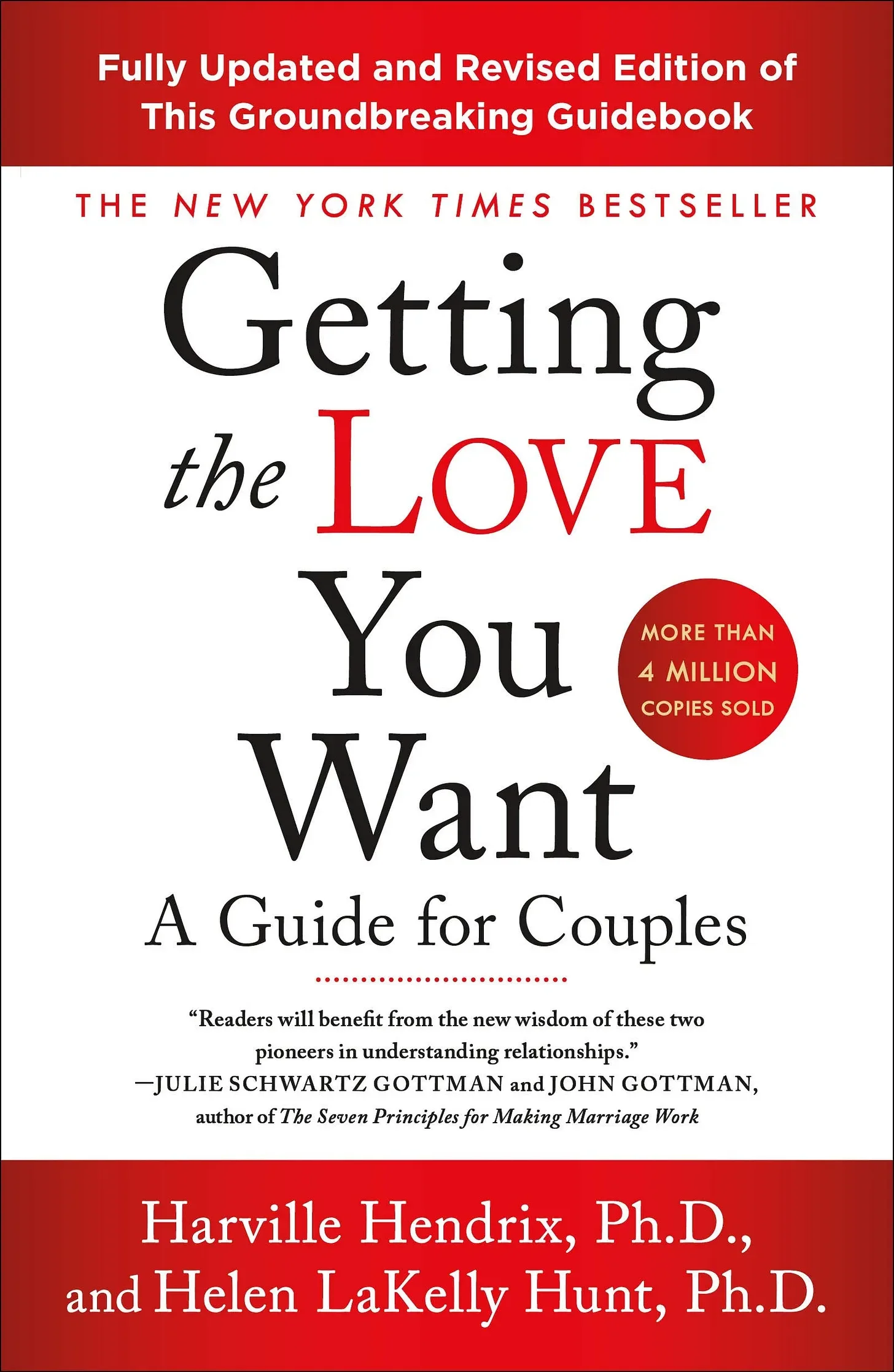
Harville Hendrix’s & Helen LaKelly Hunt’s Getting the Love You Wantis a practical guide to understanding the ‘depth work’ that comes into relationships. I like this book for two reasons:
The useful exercises to deepen your understanding of how you and your partner show up in relationship.
The idea of IMAGO, which is Hendrix’s & Hunt’s relationship theory on how our parents left ‘imprints’ on us that we unconsciously seek to match with our significant relationships as adults. Imago offers explanation as to why some people fill our psyche with burning passion, and others with but a tepid heat. The more closely your partner resembles your imago, the brighter the flame. But as I’m sure many of you have experienced, those flames can burn out quickly (or sometimes lead to wildfire). This book offers tools to address your imago and move away recreating patterns from your childhood.
I’d recommend this book to anyone curious about if and how they attract people into their lives who mirror the wounding of their childhood caretakers.
Article Review: The Rise of Lonely, Single Men
Psychology Today posted an article last month discussing, you guessed it, “The Rise of Lonely, Single Men.”Greg Matos, PsyD put forth the thought that dating opportunities for heterosexual men are diminishing. His thought was that lonely men need to address their ‘skills deficits’ in relationship in order to attract a prospective mate, or risk unwanted long-term singleness.
In my private practice I am grateful to work with several men who are seeking healthy relationships. The dating world post-COVID is challenging and confusing. The way we discuss getting healthier in relationship is like climbing a stepladder: you work on yourself for a while as a single person, then climb the next rung by putting these new skills into practice in relationship. If the relationship sticks, great. If it falls apart then we regroup and understand what happened. We address our issues, grow, and then try again.
When you land upon a relationship where your partner matches your ‘level of differentiation’ (aka level of health in relationship), and both partners are willing to grow together, then the relationship has a chance to last.
So, what now?
If you are interested in this space, keep reading! And if you have people in your life who you think may be interested as well, consider sharing this post. You are welcome to subscribe to my newsletter, where these posts will be delivered to your inbox. However, Please note that this platform is not HIPPA-compliant, and therefore your presence on this newsletter (likes, shares, subscription, etc) is not confidential.
And, if you would like to work together and are ready to reach out to schedule a free initial consultation, you may do so below.