The Practice of Nonviolent Communication in Mindfulness-Based Counseling, Asheville NC
Nonviolent communication (NVC) seeks to combine (1) consciousness, (2) language, (3) communication, and (4) sharing influence in order to increase our feelings of connection, choice, and empathy with others.
In many ways NVC is defined by what it is not. According to Marshall Rosenburg, who developed and taught NVC before his death in 2015, states:
If “violent” means acting in ways that result in hurt or harm, then much of how we communicate—judging others, bullying, having racial bias, blaming, finger pointing, discriminating, speaking without listening, criticizing others or ourselves, name-calling, reacting when angry, using political rhetoric, being defensive or judging who’s “good/bad” or what’s “right/wrong” with people—could indeed be called “violent communication.” - Marshall Rosenburg, Nonviolent Communication
This month we are discussing Nonviolent Communication. Why?
This concept and its accompanying resources have changed my own approach to communication.
The book I am reviewing - Nonviolent Communication by Marshall Rosenburg - is the most important text I have read this year.
There is ample research indicating efficacy of NVC on micro and macro scales, across multiple peoples, cultures, and nations.
Thanks for reading LWC Therapies! Subscribe for free to receive new posts and support my work.
Implications of NVC
Nonviolent communication creates the opportunity for connection across micro to macro scales. By focusing on what another person or group needs, we are able to look past their behaviors and thus maintain an open flow of empathy for their experiences. Here are some possible examples:
Micro
You catch your child in a lie about their school grades. Normally you would focus on some form of punishment to motivate them to (1) not lie and (2) get better grades. Instead, you focus on the emotions behind their behavior (in this case, lying), hear the needs driving that behavior, and discover they were feeling ashamed of their grades and afraid of the repercussions for disclosing them to you. They needed to feel safe from these emotions and that led to the lie. Together you come up with a plan for safely sharing these updates in the future while creating more structure for schoolwork.
Your partner is upset that you chose to work late. Rather than defend yourself you connect with your partner’s need that’s not being met. In this case that’s quality time spent together. ‘I’m hearing that you’re wanting more quality time together. Can we find another night this week to connect and prioritize our relationship?’
Macro
You experience someone with clear political differences than you. Your initial response is likely anger, fear, sadness, or incredulity. You choose to ask ‘What unmet need are they expressing by this behavior? How can I empathize with that unmet need? How does that help me feel about their behavior now?’
Book Review: Nonviolent Communication: A Language of Life
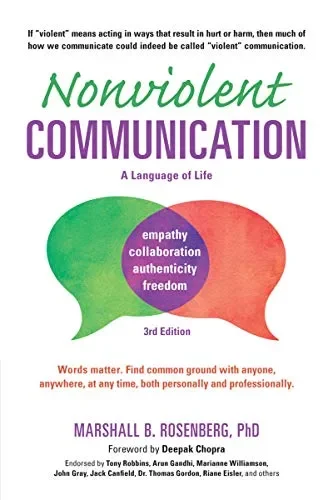
Rosenburg’s Nonviolent Communicationis the most important book I’ve read in 2022. In many ways it is the foundation for the communication skills and techniques I’ve learned over the past decade. These skills include:
How to connect empathetically with the needs behind a behavior
Structuring responses through an ‘I-Feel’ statement
Offering and receiving feedback
Steps for conflict resolution
I’d recommend this book to anyone, but especially people who find themselves in situations where they routinely struggle to:
Express their emotions in a clear and concise manner
Look past their own hurt to connect with others empathetically.
Article Review: ‘The potential for applying “Nonviolent Communication” in conservation science’
The 2021 article by Williams et al. is a qualitative study into how conservation scientists may effectively employ NVC techniques to better connect with policy makers and landholders. This article is interesting to me for a few reasons:
It does a good job summarizing the core tenants of NVC - think of it as a useful outline of NVC’s principles.
Though its scope is limited to the field of conservation science, it offers a template for connecting with groups, organizations, and systems around emotionally charged topics.
In my mind this article raises the question - ‘Where else can NVC be applied to better facilitate dialogue between opposing parties?’
Give it a read if you want the NVC quick-hits or to consider other applications for NVC with societal structures. (In my mind I immediately think of political debates, and wonder how different political discourse would feel if a politician responded to an ‘opponent’ by following the NVC guidelines!)
Monthly Mindfulness: Body Scan
The Body Scan is a mindfulness tool that allows you to tune into what is happening in your body at that given moment. I use the body scan for a number of reasons:
It can help you identify where your body is holding tension.
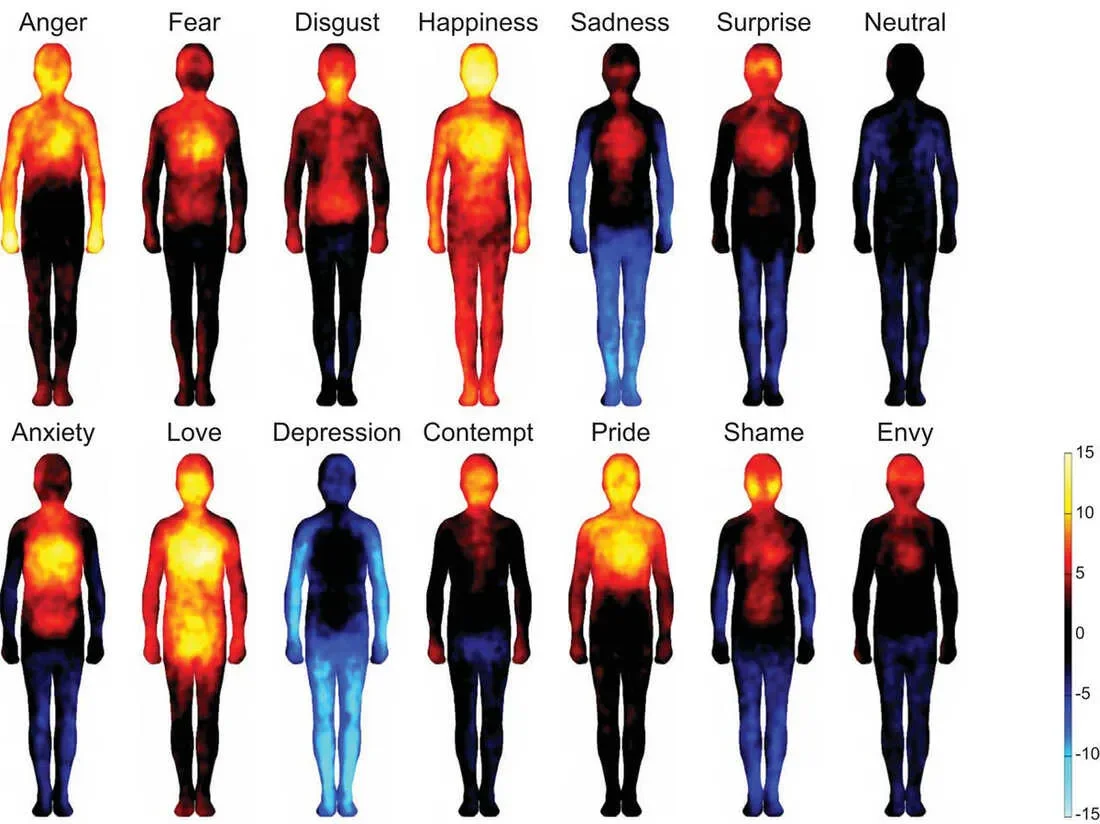
Often these points of tension are related to your emotions (for example, when I experience tightness across my chest I generally am feeling anxiety).
It is scalable. You can do a 10 second body scan or a 30 minute scan.
In my sessions I will often offer a quick body scan if my client is unsure what emotions they are feeling. By tuning into the body we can tap into the physical experience of that emotion. When we have identified the physical aspects of an emotion there is generally a reduction in tension. This exercise has the added benefit of informing you what the emotion feels like in your body, so that in future situations you can recognize the physical cues of an emotion and work with it accordingly.
I really like this graphic from the 2013 NPR article Mapping Emotions On The Body, which is an aggregated heat map from a self-reported study indicating where people may feel specific emotions in their bodies.
For today, we will do a brief 3-minute body scan. Check out the video below.
So, what now?
If you are interested in this space, keep reading! And if you have people in your life who you think may be interested as well, consider sharing this post. You are welcome to subscribe to my newsletter, where these posts will be delivered to your inbox. However, Please note that this platform is not HIPPA-compliant, and therefore your presence on this newsletter (likes, shares, subscription, etc) is not confidential.
And, if you would like to work together and are ready to reach out to schedule a free initial consultation, you may do so below.